Surveillance CCTV Poles: Types, Benefits & How to Choose the Right CCTV Camera Pole
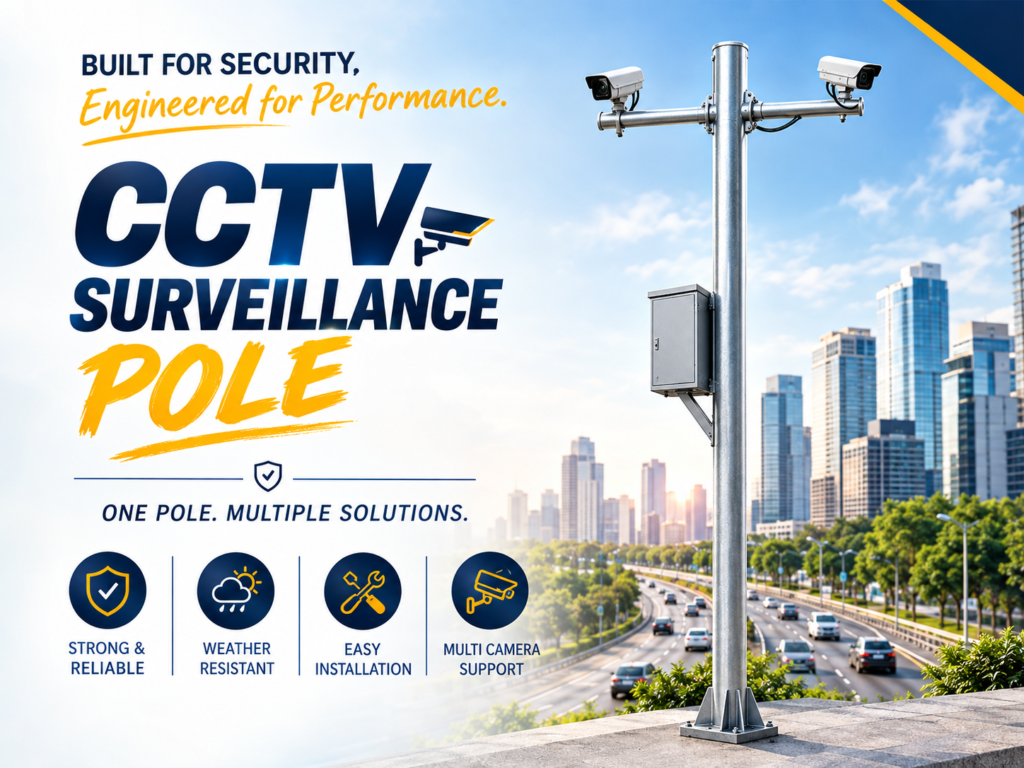
Security surveillance has become an important part of modern infrastructure. From highways and industrial facilities to residential societies and commercial buildings, CCTV cameras help monitor activities, improve security management, and support safer environments. However, even a high-quality camera needs a strong and properly positioned mounting structure to perform effectively. This is where surveillance CCTV poles play an important role. They provide a stable mounting point for cameras, helping achieve suitable viewing angles and reliable coverage across different locations. Choosing the right CCTV camera pole involves more than selecting a suitable height. Material quality, corrosion protection, structural stability, mounting arrangements, and site conditions all influence the performance and service life of the installation. In this guide, we will explore the different types of CCTV camera poles, their applications, the advantages of galvanised steel, and the key factors to consider before selecting a pole for your surveillance project. What Are Surveillance CCTV Poles? Surveillance CCTV poles are specially designed structures used to mount security cameras at suitable heights and positions. They allow cameras to monitor roads, entrances, parking areas, industrial premises, public spaces, and other locations where wall mounting may not be practical. These poles are commonly manufactured using steel because of its strength, durability, and suitability for outdoor infrastructure applications. Depending on project requirements, they can be supplied in different heights, shapes, mounting configurations, and protective finishes. A properly selected pole helps maintain camera stability, supports the required viewing angle, and provides a suitable structure for associated equipment such as junction boxes and cable arrangements. Surveillance poles are particularly useful for large sites where cameras need to cover open areas or monitor locations from an elevated position. Why Is a Quality CCTV Camera Pole Important? The performance of a surveillance system depends on several factors, including camera specifications, installation position, lighting conditions, and the stability of the mounting structure. A suitable CCTV camera pole supports the surveillance equipment while helping maintain consistent positioning. 1. Better Camera Positioning The correct pole height and mounting arrangement help position cameras to monitor the intended area. This is especially important for road junctions, entrances, parking facilities, and large industrial premises. 2. Reliable Structural Support Outdoor cameras are exposed to wind, vibration, rain, and other environmental conditions. A properly designed pole provides the structural support needed for dependable installation. 3. Wider Surveillance Coverage Elevated mounting can help cameras monitor larger open areas than certain ground-level or wall-mounted installations. However, actual coverage depends on camera optics, resolution, mounting height, and surrounding obstructions. 4. Suitable for Different Locations CCTV poles can be used across residential, commercial, industrial, and public infrastructure projects. Their specifications can be selected according to the requirements of each site. 5. Long-Term Outdoor Performance Material quality and protective surface treatment influence how well a pole withstands outdoor exposure. Choosing a suitable finish can help reduce corrosion-related deterioration and maintenance requirements. Types of CCTV Camera Poles for Different Applications Not every surveillance project requires the same pole design. The appropriate option depends on the camera type, installation environment, required height, and structural loading. 1. Galvanised CCTV Camera Mounting Pole A galvanised CCTV camera mounting pole is a popular option for outdoor surveillance infrastructure because the protective zinc coating helps reduce corrosion of the underlying steel. Galvanised poles are suitable for installations where exposure to moisture, rain, pollution, and changing weather conditions needs to be considered. They can be used in industrial facilities, commercial premises, residential complexes, parking areas, and public surveillance projects. When selecting a galvanised pole, buyers should consider the specified coating requirements, fabrication quality, structural design, and environmental conditions at the installation site. 2. Steel CCTV Camera Pole Steel CCTV poles provide a strong mounting structure for security cameras and related equipment. Their dimensions and configuration can be selected according to the installation requirements. They are useful for infrastructure projects that require dependable mounting support and project-specific fabrication. The final design should account for pole height, camera weight, mounting brackets, wind exposure, and the loads imposed by any additional equipment. 3. CCTV Poles for Highways and Roads Highway surveillance systems may require cameras to be mounted above roadside obstructions to monitor traffic movement, junctions, and other important areas. These installations demand careful consideration of pole height, structural loading, visibility, foundation design, and safe access for maintenance. The pole should be selected according to the project drawings and applicable road infrastructure requirements. 4. CCTV Poles for Industrial and Commercial Facilities Factories, warehouses, logistics facilities, and commercial complexes often need surveillance coverage across large areas. Standalone poles can provide mounting locations in open spaces where suitable building structures are unavailable. Depending on the project, the pole may also accommodate mounting brackets, cable routing, and compatible auxiliary equipment. For sites with multiple surveillance points, standardising pole specifications can also help simplify procurement and maintenance. Benefits of a Galvanised CCTV Camera Mounting Pole Galvanisation is an important consideration when choosing steel poles for outdoor applications. It involves applying a protective zinc coating to help protect steel against corrosion. Here are some of the key advantages. Corrosion Protection The zinc coating helps protect the steel surface against corrosion. This is particularly useful in outdoor locations exposed to rain, humidity, and environmental pollutants. Reduced Maintenance Requirements Appropriate galvanisation can help reduce the frequency of corrosion-related repairs and repainting compared with unsuitable or inadequately protected steel surfaces. Actual maintenance needs depend on the environment and coating condition. Suitability for Outdoor Infrastructure Galvanised steel poles are commonly used in infrastructure projects where strength and weather resistance are important considerations. Long-Term Value Although initial purchase price matters, buyers should also evaluate installation costs, coating quality, inspection requirements, and expected service life when comparing pole options. Important: Galvanisation does not make steel completely maintenance-free. Periodic inspections and appropriate care remain important, especially in harsh industrial or corrosive environments. Key Factors to Consider Before Buying Surveillance CCTV Poles Selecting a CCTV pole based only on its price or appearance can lead to problems during installation and operation. The following factors can help buyers make