Get a Quote!

+91-9810930406, 9810298278, 9910502345

33/7, to 33/10, S.S. G.T. Rd., B.R.I.A. Site-1, Ghaziabad

Edit Template

Get a Quote!

+91-9810930406, 9810298278, 9910502345

33/7, to 33/10, S.S. G.T. Rd., B.R.I.A. Site-1, Ghaziabad

Edit Template

Author name: onlinewordpress97@gmail.com

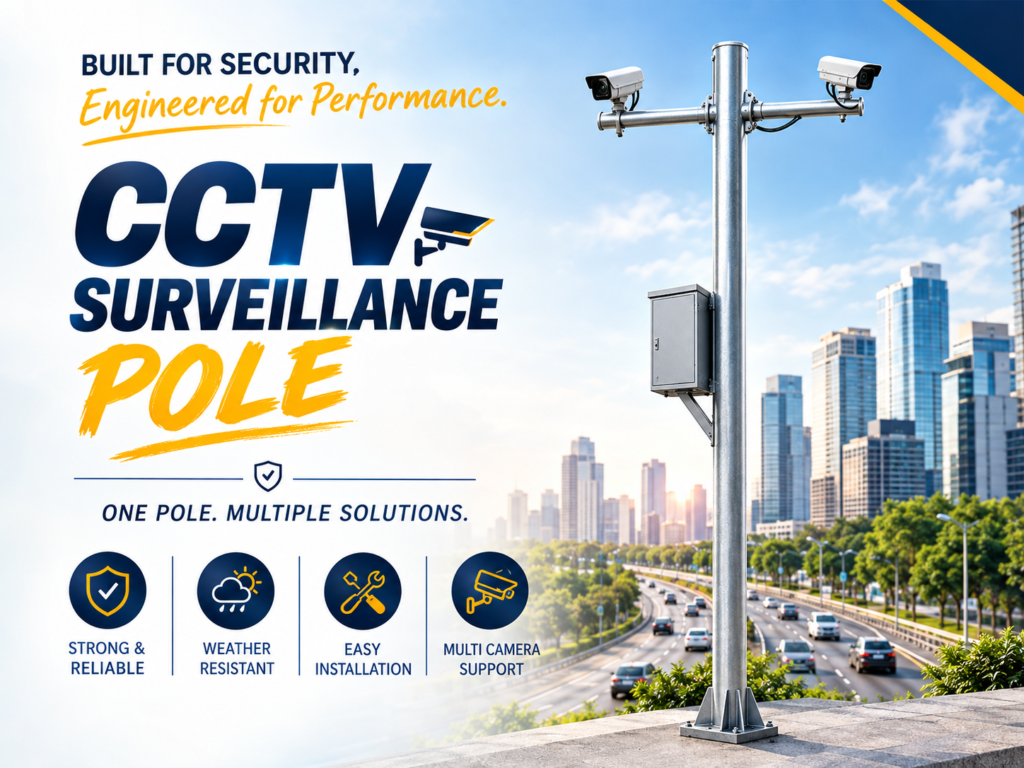
CCTV surveillance pole with multiple cameras for highways, smart cities, industrial areas, parking spaces, and toll plazas by Friends Engineers India.
Uncategorized

Surveillance CCTV Poles: Types, Benefits & How to Choose the Right CCTV Camera Pole

Security surveillance has become an important part of modern infrastructure. From highways and industrial facilities to residential societies and commercial buildings, CCTV cameras help monitor activities, improve security management, and support safer environments. However, even a high-quality camera needs a strong and properly positioned mounting structure to perform effectively. This is where surveillance CCTV poles play an important role. They provide a stable mounting point for cameras, helping achieve suitable viewing angles and reliable coverage across different locations. Choosing the right CCTV camera pole involves more than selecting a suitable height. Material quality, corrosion protection, structural stability, mounting arrangements, and site conditions all influence the performance and service life of the installation. In this guide, we will explore the different types of CCTV camera poles, their applications, the advantages of galvanised steel, and the key factors to consider before selecting a pole for your surveillance project. What Are Surveillance CCTV Poles? Surveillance CCTV poles are specially designed structures used to mount security cameras at suitable heights and positions. They allow cameras to monitor roads, entrances, parking areas, industrial premises, public spaces, and other locations where wall mounting may not be practical. These poles are commonly manufactured using steel because of its strength, durability, and suitability for outdoor infrastructure applications. Depending on project requirements, they can be supplied in different heights, shapes, mounting configurations, and protective finishes. A properly selected pole helps maintain camera stability, supports the required viewing angle, and provides a suitable structure for associated equipment such as junction boxes and cable arrangements. Surveillance poles are particularly useful for large sites where cameras need to cover open areas or monitor locations from an elevated position. Why Is a Quality CCTV Camera Pole Important? The performance of a surveillance system depends on several factors, including camera specifications, installation position, lighting conditions, and the stability of the mounting structure. A suitable CCTV camera pole supports the surveillance equipment while helping maintain consistent positioning. 1. Better Camera Positioning The correct pole height and mounting arrangement help position cameras to monitor the intended area. This is especially important for road junctions, entrances, parking facilities, and large industrial premises. 2. Reliable Structural Support Outdoor cameras are exposed to wind, vibration, rain, and other environmental conditions. A properly designed pole provides the structural support needed for dependable installation. 3. Wider Surveillance Coverage Elevated mounting can help cameras monitor larger open areas than certain ground-level or wall-mounted installations. However, actual coverage depends on camera optics, resolution, mounting height, and surrounding obstructions. 4. Suitable for Different Locations CCTV poles can be used across residential, commercial, industrial, and public infrastructure projects. Their specifications can be selected according to the requirements of each site. 5. Long-Term Outdoor Performance Material quality and protective surface treatment influence how well a pole withstands outdoor exposure. Choosing a suitable finish can help reduce corrosion-related deterioration and maintenance requirements. Types of CCTV Camera Poles for Different Applications Not every surveillance project requires the same pole design. The appropriate option depends on the camera type, installation environment, required height, and structural loading. 1. Galvanised CCTV Camera Mounting Pole A galvanised CCTV camera mounting pole is a popular option for outdoor surveillance infrastructure because the protective zinc coating helps reduce corrosion of the underlying steel. Galvanised poles are suitable for installations where exposure to moisture, rain, pollution, and changing weather conditions needs to be considered. They can be used in industrial facilities, commercial premises, residential complexes, parking areas, and public surveillance projects. When selecting a galvanised pole, buyers should consider the specified coating requirements, fabrication quality, structural design, and environmental conditions at the installation site. 2. Steel CCTV Camera Pole Steel CCTV poles provide a strong mounting structure for security cameras and related equipment. Their dimensions and configuration can be selected according to the installation requirements. They are useful for infrastructure projects that require dependable mounting support and project-specific fabrication. The final design should account for pole height, camera weight, mounting brackets, wind exposure, and the loads imposed by any additional equipment. 3. CCTV Poles for Highways and Roads Highway surveillance systems may require cameras to be mounted above roadside obstructions to monitor traffic movement, junctions, and other important areas. These installations demand careful consideration of pole height, structural loading, visibility, foundation design, and safe access for maintenance. The pole should be selected according to the project drawings and applicable road infrastructure requirements. 4. CCTV Poles for Industrial and Commercial Facilities Factories, warehouses, logistics facilities, and commercial complexes often need surveillance coverage across large areas. Standalone poles can provide mounting locations in open spaces where suitable building structures are unavailable. Depending on the project, the pole may also accommodate mounting brackets, cable routing, and compatible auxiliary equipment. For sites with multiple surveillance points, standardising pole specifications can also help simplify procurement and maintenance. Benefits of a Galvanised CCTV Camera Mounting Pole Galvanisation is an important consideration when choosing steel poles for outdoor applications. It involves applying a protective zinc coating to help protect steel against corrosion. Here are some of the key advantages. Corrosion Protection The zinc coating helps protect the steel surface against corrosion. This is particularly useful in outdoor locations exposed to rain, humidity, and environmental pollutants. Reduced Maintenance Requirements Appropriate galvanisation can help reduce the frequency of corrosion-related repairs and repainting compared with unsuitable or inadequately protected steel surfaces. Actual maintenance needs depend on the environment and coating condition. Suitability for Outdoor Infrastructure Galvanised steel poles are commonly used in infrastructure projects where strength and weather resistance are important considerations. Long-Term Value Although initial purchase price matters, buyers should also evaluate installation costs, coating quality, inspection requirements, and expected service life when comparing pole options. Important: Galvanisation does not make steel completely maintenance-free. Periodic inspections and appropriate care remain important, especially in harsh industrial or corrosive environments. Key Factors to Consider Before Buying Surveillance CCTV Poles Selecting a CCTV pole based only on its price or appearance can lead to problems during installation and operation. The following factors can help buyers make


Flag Mast Pole Manufacturer in Ghaziabad Uttar Pradesh
Uncategorized, Flag Mast Poles

Flag Mast Pole: A Practical Guide to Choosing the Right Pole

A flag is more than a symbol when it is displayed at a government building, school, corporate campus, stadium, industrial facility, or large public space. The structure supporting it needs to look professional while also standing reliably outdoors. That is where a flag mast pole becomes important. A well-designed flag mast pole combines structural strength, durability, appearance, and suitability for the location where it will be installed. The right choice depends on factors such as pole height, steel grade, wind conditions, surface protection, installation requirements, and the type of flag being displayed. For projects in North India, working with an experienced flag mast pole manufacturer can also make it easier to select the right specifications rather than simply choosing a pole based on height or appearance. What Is a Flag Mast Pole? A flag mast pole is a vertical structural pole designed to display one or more flags at a suitable height. Unlike temporary flag stands, permanent mast poles are manufactured for outdoor use and are designed to remain stable under changing weather conditions. Depending on the project, a flag mast pole can be manufactured in different heights, diameters, thicknesses, finishes, and configurations. The design may also include suitable fittings for raising, lowering, securing, and displaying the flag. For large installations, engineering becomes particularly important because a taller pole has greater exposure to wind. The foundation, pole dimensions, material thickness, connections, and overall design therefore need to be considered together. Why Does the Design of a Flag Mast Pole Matter? It can be tempting to think that a flag pole is simply a long steel pipe. In reality, its performance depends on several connected factors. 1. Pole Height The required height depends on the location and purpose of the installation. A pole for a small institutional entrance may have very different requirements from one installed at a stadium, government complex, or large corporate campus. 2. Wind Conditions Wind is one of the most important considerations when designing an outdoor mast. As pole height and exposed surface area increase, the effects of wind also become important. Indian structural design practice includes specific provisions for wind loads under IS 875 (Part 3):2015. This is why a flag mast should be selected according to the actual project requirements rather than using the same specification for every location. 3. Steel and Fabrication The material and fabrication quality directly influence the strength and service life of the pole. Controlled cutting, accurate fabrication, proper welding, and suitable surface treatment can help produce a more reliable finished structure. For other steel pole applications, you can also explore our Steel Tubular Poles and understand how different pole designs are used across infrastructure and industrial projects. 4. Surface Protection Outdoor steel structures are exposed to moisture, dust, rain, and other environmental conditions. Protective treatments such as hot-dip galvanization or suitable coating systems can help improve resistance to corrosion. The appropriate finish should be selected according to the installation environment and project specifications. Flag Mast Pole vs High Mast Pole: Are They the Same? The terms can sometimes sound similar, but their purposes are different. A flag mast pole is primarily intended for displaying flags and creating a prominent visual feature. A high mast pole, on the other hand, is generally associated with large-area lighting. High mast systems are commonly used for highways, stadiums, industrial areas, large yards, public spaces, and other locations where illumination over a wide area is required. Some infrastructure projects may require both types of structures at the same site. For example, a large institutional campus could use flag mast poles near its entrance while using high mast lighting systems to illuminate parking areas or open grounds. If your project requires large-area illumination, explore our High Mast Poles for more information about high mast solutions. Where Are Flag Mast Poles Used? The versatility of flag mast poles makes them suitable for a wide range of locations. 1. Government Buildings Government offices and public institutions often use prominent flag installations to create a formal and professional appearance. 2. Schools, Colleges and Universities Educational campuses may use flag mast poles at entrances, assembly grounds, administrative buildings, and ceremonial areas. 3. Corporate Offices A professionally designed flag installation can add a distinctive visual element to corporate campuses, headquarters, and commercial complexes. 4. Stadiums and Sports Grounds Large outdoor venues often require taller and more visible flag installations that can be seen from a considerable distance. 5. Industrial Facilities Factories and industrial premises may install flag mast poles near administrative buildings, entrances, or designated display areas. 6. Public and Architectural Spaces Flag mast poles can also be incorporated into plazas, institutional developments, memorial spaces, and other architectural installations. What Should You Consider Before Buying a Flag Mast Pole? Choosing a pole only by its height can result in an unsuitable specification. Before placing an order, consider the following: For projects requiring tapered multi-section steel poles, you can also explore Swaged Tubular Poles and discuss the appropriate design based on your application. Discussing these requirements with a manufacturer before finalizing the specification can help avoid unnecessary changes later. Manufacturing Quality Makes a Difference A durable flag mast pole begins with appropriate design and fabrication. Friends Engineers India is an established manufacturer and supplier of steel poles and fabricated structures for infrastructure and industrial applications. Founded in 1998, the company focuses on manufacturing products according to project requirements, technical specifications, and applicable industry practices. The manufacturing process involves controlled fabrication methods such as precision cutting, welding, and surface treatment. These processes help achieve the structural strength, dimensional accuracy, and durability required for outdoor applications. You can explore Our Products to see the wider range of steel poles and fabricated solutions offered by Friends Engineers India. For structural steelwork, Indian Standards provide important references for design and construction. IS 800:2007 covers general construction in steel, while IS 875 (Part 3):2015 addresses wind loads. The applicable standards and engineering requirements should be determined according to the specific project. Can Flag Mast Poles Be

Decorative poles in Ghaziabad for modern outdoor lighting
Uncategorized, Decorative Poles

Decorative Poles in Ghaziabad: Design, Applications & Selection Guide

Good outdoor lighting does more than brighten a road or pathway. It can change the way an entire space looks after sunset. A landscaped garden can feel more welcoming, a residential entrance can look more elegant, and a commercial property can create a stronger visual identity with the right lighting infrastructure. This is where decorative poles in Ghaziabad are becoming an increasingly useful solution. Unlike ordinary lighting supports, decorative poles are designed to combine lighting functionality, structural strength and visual appeal. Depending on the project, they can be used in residential societies, parks, commercial areas, hotels, walkways, institutional campuses and other outdoor spaces. Friends Engineers India, established in 1998, manufactures and supplies steel poles, decorative poles, brackets and fabricated structures for different industrial, commercial and infrastructure requirements. What Are Decorative Poles? Decorative poles are specially designed poles used to support outdoor lighting fixtures while adding an architectural element to the surroundings. A conventional lighting pole generally focuses on the functional requirement of supporting a luminaire. A decorative pole gives additional attention to: This makes decorative poles particularly suitable for locations where lighting needs to blend with landscaping, architecture or the overall character of the property. For more information about available designs and applications, visit the Decorative Poles page from Friends Engineers India. Why Are Decorative Poles Popular in Ghaziabad? Ghaziabad has a mix of residential developments, commercial properties, industrial areas, institutional campuses and expanding urban infrastructure. As these spaces become more developed, outdoor lighting is increasingly expected to perform two functions: Provide useful illumination + complement the appearance of the space This is one reason decorative lighting solutions are considered for entrances, internal roads, gardens, pedestrian areas, commercial properties and landscaped zones. For example, a simple lighting pole may be perfectly suitable for an industrial road where functionality is the main concern. A residential township entrance, hotel driveway or landscaped public area may require something visually different. The choice ultimately depends on the project’s lighting requirements, surroundings, design objectives and structural specifications. Decorative Poles vs. Regular Lighting Poles Both types of poles have their place in outdoor infrastructure. Regular Lighting Poles Regular poles are generally selected where the main objective is to provide practical lighting support. They are commonly used for: Decorative Poles Decorative poles place additional emphasis on the visual appearance of the installation. They can be suitable for: The choice should not be based on appearance alone. Pole height, fixture weight, wind conditions, spacing, material, foundation and site requirements should also be considered. Where Can Decorative Light Poles Be Used? The versatility of decorative light poles makes them suitable for many different environments. 1. Residential Societies Modern housing projects often include landscaped entrances, gardens, internal roads and pedestrian areas. Decorative poles can help create a consistent appearance across these spaces while providing lighting where required. 2. Parks and Gardens Parks require lighting that works well with landscaping. Decorative poles can be used around: The design can be selected to complement the surrounding landscape rather than looking like a purely functional structure. 3. Commercial Properties Shopping centres, office complexes and business parks often pay attention to their outdoor appearance. Decorative light poles can be incorporated into entrances, pathways, parking areas and landscaped sections. 4. Hotels and Resorts Hospitality properties typically focus heavily on the appearance of their outdoor spaces. Decorative lighting poles can be used around driveways, gardens, entrances and walkways to create a coordinated visual environment. 5. Institutional Campuses Schools, colleges, hospitals and corporate campuses may use decorative lighting around pedestrian areas, entrances and landscaped sections. The pole design can be selected according to the architectural style of the campus. 6. Public and Heritage Areas In locations where architecture and landscaping are important, decorative poles can be designed to complement the surrounding environment. This can be particularly useful where standard modern lighting structures may appear visually out of place. Important Factors to Consider Before Choosing Decorative Poles Buying decorative poles should not be based only on a photograph or design. Several technical factors should be evaluated before finalizing a product. 1. Pole Height The correct height depends on the application and lighting arrangement. A pathway may require a different pole height from a broad internal road or commercial driveway. Consider: The Bureau of Energy Efficiency’s street-lighting guidance also highlights proper pole height and spacing as important considerations for achieving appropriate light distribution. 2. Material Selection Steel is widely used for lighting structures because it provides strength while also allowing manufacturers to create different shapes and configurations. The material should be selected according to: 3. Corrosion Protection Outdoor poles are exposed to rain, humidity, pollution, sunlight and other environmental conditions. Therefore, corrosion protection is an important part of selecting a long-term outdoor lighting solution. The required protective treatment should be determined according to the installation environment and project specifications. 4. Design and Appearance The design should work with the surrounding architecture. For example: This approach ensures that the pole becomes part of the overall design instead of appearing as an isolated structure. 5. Lighting Fixture Compatibility The pole and lighting fixture should be considered together. The mounting arrangement may include: The bracket and pole should be capable of accommodating the intended fixture and associated loads. Why Decorative Brackets Matter When discussing decorative poles, one component is sometimes overlooked: the decorative bracket. A bracket connects or supports the lighting fixture and can have a significant impact on the overall appearance of the installation. Imagine a beautifully designed decorative pole fitted with a basic bracket that does not match its proportions. The overall structure may look unbalanced. A properly designed decorative bracket can instead create a more coordinated appearance. Decorative brackets may be designed according to: You can explore the Decorative Brackets range from Friends Engineers India for more information. The Manufacturing Process Makes a Difference The final appearance of a decorative pole is only one part of the product. Behind every properly manufactured pole are several important processes, including material selection, cutting, fabrication, welding, finishing and quality inspection. Precision

Uncategorized

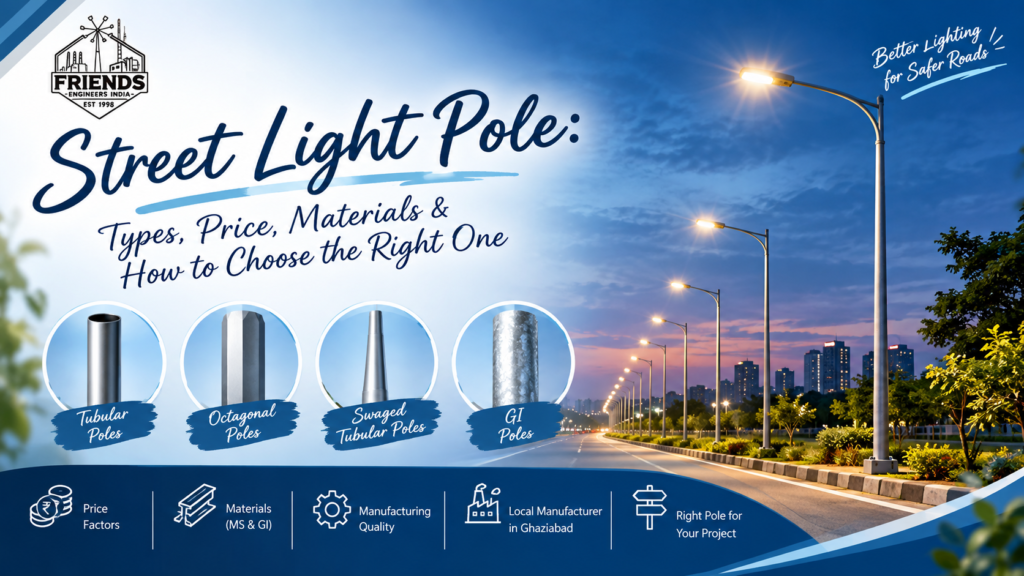
Street Light Pole: Types, Price, Materials & How to Choose the Right One

A well-designed road needs more than just a good surface and proper markings. Street lighting plays an important role in improving visibility for drivers, pedestrians and other road users after dark. But when people talk about street lighting, the focus is often only on the LED fixture. The street light pole supporting that fixture is equally important. A street lamp pole has to support the lighting equipment while handling outdoor conditions such as wind, rain, temperature changes and long-term exposure to the environment. The right pole therefore depends on more than appearance or price. Whether you are planning lighting for a residential road, industrial area, highway, commercial complex, parking area or public infrastructure project, understanding the basics of street light poles can help you make a better purchasing decision. What Is a Street Light Pole? A street light pole is a vertical structural support used to mount outdoor lighting fixtures at a suitable height. Depending on the project, it can be designed with a single arm, double arm or other mounting arrangements. The pole is usually selected according to factors such as: A properly selected pole should provide the required structural support while fitting the practical requirements of the site. Why Does the Right Street Lamp Pole Matter? It may be tempting to choose a pole simply by looking at its height and price. However, a street lighting system works as a combination of several components. The pole, bracket, foundation and lighting fixture must work together. For example, a pole designed for a small local road may not be appropriate for a wide road requiring a higher mounting height or a larger lighting fixture. Similarly, a pole installed in an exposed outdoor environment may require suitable corrosion protection. This is why project requirements should be considered before finalising a street light pole. Common Types of Street Light Poles There is no single pole design suitable for every application. Different projects use different configurations depending on structural and lighting requirements. 1. Tubular Steel Poles Tubular poles are widely used for outdoor infrastructure applications because steel provides a strong structural base and can be fabricated according to project requirements. They can be manufactured in different dimensions and configurations, with suitable brackets or arms added for the lighting fixture. Tubular poles can be considered for roads, industrial areas, campuses, parking spaces and other outdoor applications where a durable steel support is required. 2. Octagonal Poles Octagonal poles have an eight-sided cross-section and are commonly used in outdoor lighting and infrastructure projects. Their appearance is also suitable for applications where a clean and modern pole profile is preferred. For example, octagonal poles can be considered for highways, urban roads, industrial areas, commercial developments and other infrastructure projects where the design and structural requirements call for this type of pole. 3. GI Street Light Poles GI, or galvanized iron/steel poles, use a galvanized protective coating to improve resistance against corrosion. This can be particularly useful for outdoor applications where the pole is exposed to moisture and changing weather conditions. However, the expected service life of a galvanized pole still depends on factors such as coating quality, environment, design, installation and maintenance. 4. Swaged Tubular Poles A swaged tubular pole is manufactured using multiple tubular steel sections that are progressively reduced and joined to create a tapered structure. This design provides a practical combination of strength, manageable weight and a streamlined appearance. Swaged tubular poles are commonly considered for street lighting, roads, highways, industrial areas, commercial developments, parks and other infrastructure projects. What Materials Are Used for Street Light Poles? Steel is commonly used for many infrastructure pole applications because it offers a useful combination of strength, fabrication flexibility and durability. Two terms that buyers frequently encounter are MS steel and GI. 1. MS Steel MS, or mild steel, is widely used for fabricated structures and poles. It can be formed, welded and manufactured into different designs according to project specifications. For outdoor use, the steel generally needs an appropriate protective treatment or coating to help manage corrosion. 2. GI / Galvanized Steel Galvanization provides a protective zinc coating over steel. This helps protect the underlying steel from corrosion. The choice between different materials and finishes should depend on the installation environment, project specifications, expected exposure and required service life. What Determines Street Light Pole Price? One of the most common questions from buyers is: What is the street light pole price? There is no single price that applies to every pole. The final cost depends on the specifications and quantity required. Some of the major factors include: 1. Pole Height A taller pole generally requires more material and may require a different structural design compared with a shorter pole. 2. Steel Grade and Material Quantity The material specification and amount of steel used can directly affect manufacturing cost. 3. Pole Design Tubular, octagonal, swaged and other designs can have different manufacturing requirements. 4. Bracket or Arm Configuration A single-arm pole and a double-arm pole have different fabrication requirements. The arm length and design can also influence the overall cost. 5. Surface Protection Painting, galvanizing or other protective treatments can affect the final price. 6. Lighting Fixture Requirements The weight and mounting arrangement of the lighting fixture need to be considered when designing the pole. 7. Foundation Requirements The pole itself is only one part of the installation. Foundation design can depend on pole dimensions, loads, soil conditions and site requirements. 8. Quantity Bulk project orders can have different commercial terms compared with a small individual requirement. For these reasons, searching only for a generic street light pole price may not give you a useful comparison. It is better to provide the manufacturer with the required height, pole type, quantity, fixture details and project location. What About Street Light With Pole Price? Buyers sometimes search for street light with pole price when they want a complete lighting solution rather than a pole alone. However, the phrase can refer to different combinations. For example, the total

Uncategorized, Gantry Structures

Gantry Structure & Gantry Girder: Everything You Need to Know (Plus Why Ghaziabad Is a Manufacturing Hub for Them)

f you’ve ever driven past a busy railway yard, a construction site, or a heavy industrial plant, chances are you’ve seen a gantry structure at work without even realizing it. These tall, bridge-like steel frameworks quietly do some of the heaviest lifting — literally — in India’s infrastructure and industrial sectors. In this blog, we’ll break down what a gantry structure actually is, how a gantry girder fits into the picture, where these structures are used, and why choosing the right gantry structure manufacturer in Ghaziabad can make or break your project’s safety and efficiency. Let’s get into it. What Is a Gantry Structure? A gantry structure is essentially a rigid, load-bearing steel framework built to support cranes, conveyors, signals, or other heavy equipment that needs to move horizontally across a fixed path. Think of it as a “bridge” for machines rather than vehicles — one that spans an opening (like a workshop bay, a rail track, or a road) and carries the weight of whatever travels along it. Gantry structures are commonly built using rolled steel sections, fabricated plate girders, or trussed frameworks, depending on the load they need to carry and the span they need to cover. They’re designed to handle: Because they carry such significant and repetitive stress, gantry structures are engineered with a good safety margin and built to relevant Indian and international structural codes. What Is a Gantry Girder? Here’s where people often get a little confused — a gantry girder is not the same as the entire gantry structure. It’s a specific, critical component within it. A gantry girder is the horizontal steel beam that runs along the top of the gantry structure’s supporting columns. Its job is to carry the crane’s wheel loads as the crane (or trolley) travels back and forth. In simple terms, if the gantry structure is the skeleton, the gantry girder is the “track” that the crane rides on. Gantry girders are usually designed as: Because a gantry girder experiences both vertical bending (from the crane’s weight) and lateral bending (from horizontal crane movement), its design involves careful calculation of bending moments, shear forces, and deflection limits — usually in accordance with codes like IS 800 (general steel structure design) and IS 807 (design and erection of cranes and hoists). Where Are Gantry Structures and Girders Used? These structures aren’t limited to one industry. You’ll typically find them in: Each application demands a slightly different design approach, which is why working with an experienced fabricator matters as much as the raw steel quality. Why Design and Fabrication Quality Matter So Much A poorly designed gantry girder can lead to excessive deflection, fatigue cracking, or even structural failure over time — especially under repetitive crane loading. Since these structures often operate in industrial environments with continuous use, even small design or welding errors can compound into major safety and downtime issues. That’s why it’s important to work with a manufacturer who understands: This is exactly where Friends Engineers India comes in. Friends Engineers India: A Trusted Gantry Structure Manufacturer in Ghaziabad Ghaziabad has long been part of the industrial belt surrounding Delhi-NCR, home to a strong base of steel fabrication expertise, raw material availability, and logistics connectivity — making it a natural hub for structural steel manufacturing. Since 1998, Friends Engineers India has been manufacturing and supplying steel poles and fabricated structures to infrastructure and industrial clients across the country. Led by Mr. Praveen Kumar Gupta, the company has built its reputation on a simple principle: deliver durable, standards-compliant products, on time, every time. While the company is well known for its range of MS steel tubular poles, GI poles and bends, steel structures, pole brackets, and trusses, the same in-house engineering and fabrication capability extends naturally into gantry structures and gantry girders — products that demand the same precision, load-bearing expertise, and quality control the company has practiced for over two decades. If you’re evaluating a gantry structure manufacturer in Ghaziabad, here’s what sets a dependable one apart: Related Reading on Our Site Since gantry structures are just one part of a much bigger structural steel ecosystem, you may also find these useful: (Note: Please swap these placeholder links with the exact live URLs of the respective product pages on friendsengineersindia.com before publishing.) Frequently Asked Questions (FAQs) Q1. What is the difference between a gantry structure and a gantry girder? A gantry structure is the complete steel framework — columns, bracing, and beams — that supports moving equipment like cranes. A gantry girder is just the horizontal beam within that structure on which the crane’s wheels travel. Q2. What material is typically used for gantry girders? Gantry girders are usually fabricated from structural steel conforming to IS 2062, chosen for its strength, weldability, and consistent mechanical properties. Q3. How is the size of a gantry girder decided? It depends on factors like crane capacity, span length, wheel spacing, and the number of duty cycles the crane will perform. A qualified structural engineer calculates these based on relevant load combinations from IS 875 and design codes like IS 800/IS 807. Q4. Can gantry structures be customized for specific industries? Yes. Gantry structures are almost always custom-engineered based on the specific load, span, and application — whether it’s an EOT crane in a factory, a signal gantry on a railway line, or a signage gantry over a highway. Q5. Why should I choose a local gantry structure manufacturer in Ghaziabad instead of a distant supplier? Working with a manufacturer based in Ghaziabad/NCR often means shorter lead times, easier site visits for design verification, lower transportation costs, and faster after-sales support — all of which matter for time-sensitive industrial projects. Q6. Does Friends Engineers India provide custom fabrication for gantry structures? Friends Engineers India brings over two decades of experience in fabricating steel structures, poles, and industrial components as per client specifications and applicable standards, making them well-positioned to support gantry structure and gantry girder requirements as well. Final Thoughts Gantry structures and gantry girders may not be the flashiest part of industrial infrastructure, but they’re absolutely essential — quietly carrying tons of load, day

Uncategorized

Decorative Poles in Ghaziabad: Design, Applications & Selection Guide

A well-designed outdoor space needs more than good roads, landscaping, and buildings. Lighting also plays an important role in how a place looks and feels after sunset. This is where decorative poles can make a noticeable difference. Unlike basic lighting supports, decorative poles are designed to combine structural strength, lighting functionality, and visual appeal. They can be used in parks, residential societies, commercial developments, walkways, hotels, institutional campuses, heritage locations, and urban infrastructure projects. For projects looking for both appearance and dependable performance, choosing the right decorative poles in Ghaziabad requires attention to factors such as material, height, design, lighting arrangement, corrosion protection, load requirements, and installation conditions. Friends Engineers India, established in 1998, manufactures and supplies steel poles, brackets, and fabricated structures for industrial, commercial, and infrastructure applications. What Are Decorative Poles? Decorative poles are specially designed lighting poles that provide illumination while also contributing to the appearance of an outdoor environment. A conventional street light pole primarily focuses on supporting a lighting fixture. A decorative pole goes a step further by incorporating design elements such as: This makes them particularly useful in locations where lighting is not only a functional requirement but also part of the overall landscape design. Why Are Decorative Poles Becoming Popular? Modern infrastructure is increasingly focused on creating spaces that are functional, safe, and visually attractive. A well-planned lighting system can improve visibility and contribute to the character of a location. The Bureau of Energy Efficiency’s street-lighting guidance highlights the importance of factors such as suitable pole height and spacing, luminaire aesthetics, light distribution, maintenance, and energy efficiency when planning outdoor lighting systems. This is why decorative lighting is increasingly considered for: The right combination of pole design and lighting can make a space more welcoming while still meeting its practical lighting requirements. Decorative Poles vs. Standard Lighting Poles One common question is: Why choose decorative poles when standard lighting poles are available? The answer largely depends on the project. Standard poles are generally selected when the main priority is straightforward lighting functionality and cost efficiency. Decorative poles are preferred when the lighting infrastructure also needs to complement the architecture and landscaping. For example, a highway may primarily require functional lighting, whereas a landscaped commercial complex may want lighting supports that match its architectural style. In other words: Standard pole = primarily functional Decorative pole = functional + aesthetic The best choice depends on the location, lighting requirements, project budget, structural requirements, and desired appearance. What Are Decorative Light Poles Used For? Decorative light poles can be used in a wide variety of outdoor environments. 1. Parks and Gardens Parks often require lighting that blends naturally with landscaping. Decorative poles can provide illumination along walking paths, entrances, seating areas, and landscaped sections without appearing visually out of place. 2. Residential Societies Residential developments can use decorative lighting poles along internal roads, entrances, pathways, gardens, and common areas. A carefully selected pole design can complement the architectural style of the housing project. 3. Commercial Complexes Shopping centres, office complexes, business parks, and retail developments often use decorative lighting to create a more attractive exterior environment. 4. Hotels and Resorts Hotels and resorts usually pay close attention to their outdoor appearance. Decorative poles can support lighting around driveways, gardens, pathways, parking areas, and entrance zones. 5. Heritage and Architectural Areas In heritage locations, modern-looking infrastructure may not always suit the surroundings. Decorative pole designs can be developed to complement traditional architectural elements. 6. Walkways and Public Spaces Decorative light poles can be installed along pedestrian paths, public areas, plazas, and landscaped zones where appearance is an important part of the design. How to Choose the Right Decorative Poles Not every decorative pole is suitable for every project. Several technical and design factors should be evaluated before placing an order. 1. Pole Height Pole height affects both lighting coverage and visual proportion. A pole that is too short may provide insufficient coverage, while an unnecessarily tall pole may not suit a landscaped or architectural environment. The required height should therefore be decided according to: 2. Material Steel is commonly selected for outdoor lighting structures because it offers a useful combination of strength, fabrication flexibility, and durability. Material selection should consider the expected loading, environmental exposure, required service life, and applicable project specifications. Friends Engineers India manufactures steel poles and fabricated structures according to project requirements. 3. Corrosion Protection Outdoor poles are exposed to rain, moisture, pollution, sunlight, and changing weather conditions. Therefore, surface protection is an important consideration when selecting decorative poles. Depending on the project, appropriate protective treatments or coatings can help improve resistance against corrosion and environmental exposure. 4. Pole Design The design should complement the surrounding environment. A simple decorative design may be appropriate for a modern residential project, while a more ornamental profile may work better for a heritage-style development or landscaped commercial property. 5. Lighting Arrangement The number and arrangement of fixtures should be considered along with the pole design. Depending on the application, projects may require: The structural design should be compatible with the selected lighting equipment and expected loads. Decorative Brackets: Small Component, Important Role A decorative pole is not always complete without the right bracket. Decorative brackets connect the lighting fixture to the pole while also contributing to the overall appearance of the installation. A poorly matched bracket can make an otherwise attractive pole look unfinished. On the other hand, a well-designed bracket can create a visually balanced lighting structure. Decorative brackets can be customized according to: For projects requiring coordinated pole and bracket designs, it is useful to work with a manufacturer capable of handling both components. You can explore Friends Engineers India’s Decorative Brackets for more information about its bracket solutions. Manufacturing Quality Matters The appearance of a decorative pole is important, but aesthetics should never replace structural performance. A properly manufactured pole should maintain dimensional accuracy, sound fabrication, suitable welding, appropriate finishing, and structural stability. At Friends Engineers India, manufacturing and quality-control processes are used

Uncategorized, Decorative Brackets, Decorative Poles

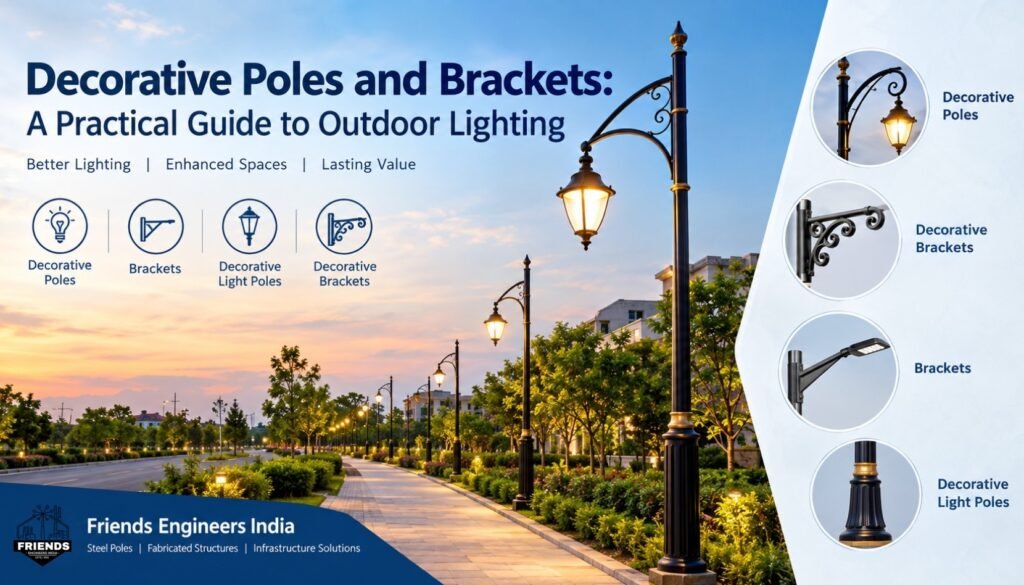
Decorative Poles and Brackets: A Practical Guide for Better Outdoor Lighting

Outdoor lighting is no longer just about making roads, pathways, and public areas visible after sunset. Today, lighting also contributes to the appearance, character, safety, and overall experience of a space. This is where decorative poles and well-designed lighting supports can make a real difference. From landscaped roads and parks to hotels, commercial developments, residential projects, institutional campuses, and public spaces, the right lighting structure can combine functionality with visual appeal. However, choosing an attractive design is only one part of the process. The pole and its supporting components must also provide the required strength, durability, and performance. In this guide, we will look at decorative lighting poles, brackets, their applications, materials, important selection factors, and what to consider when choosing a manufacturer. What Are Decorative Poles? Decorative poles are lighting poles designed to combine structural performance with an attractive appearance. Unlike conventional utility or lighting poles that are primarily focused on function, decorative designs place greater emphasis on shape, proportions, finish, and overall visual integration with the surrounding environment. Friends Engineers India manufactures decorative poles for applications including parks, gardens, pathways, streets, commercial areas, public spaces, landscaping projects, and architectural developments. Depending on the project, decorative poles can be manufactured in different heights, designs, mounting arrangements, and finishes. Common applications include: The objective is simple: provide reliable lighting support without compromising the appearance of the space. Why Are Decorative Light Poles Becoming Popular? Modern infrastructure projects increasingly consider both functionality and aesthetics. A lighting installation should provide suitable illumination, but it should also complement the architecture and landscape around it. This is one reason decorative light poles are increasingly considered for projects where appearance matters. 1. They Improve Visual Appeal A well-designed pole can become part of the overall landscape design. Instead of looking like an independent utility structure, it can complement buildings, pathways, gardens, roads, and other architectural elements. 2. They Provide Functional Lighting Support Despite their decorative appearance, these poles still have an important structural role. They need to safely support the selected lighting fixture and withstand the conditions expected at the installation site. For road and street lighting applications, the lighting fixture itself may also need to comply with applicable standards. For example, IS 10322 (Part 5/Sec 3) covers requirements for luminaires used for road and street lighting and other public outdoor lighting applications. 3. They Offer Design Flexibility Every project has its own architectural style. Decorative poles can therefore be developed in different configurations to suit the required height, design, mounting arrangement, and finish. 4. They Work Across Different Outdoor Environments Decorative lighting structures can be used in landscaped areas, commercial developments, pedestrian pathways, public spaces, institutional premises, and other outdoor environments. Understanding Brackets in Lighting Pole Applications A lighting pole is only one part of a complete outdoor lighting structure. The bracket or supporting arm is equally important because it helps position and support the lighting fixture. Brackets are fabricated components used to mount lighting fixtures to poles or other structures. Their design needs to be compatible with the pole, luminaire, mounting arrangement, and project requirements. Depending on the application, brackets may be designed for: The appropriate bracket design depends on factors such as fixture weight, projection, mounting height, wind conditions, pole dimensions, and the intended application. What Makes Good Decorative Brackets? A decorative bracket should not be selected based on appearance alone. Although its design contributes to the visual character of the lighting installation, the bracket is also a structural component. It therefore needs to be properly designed and fabricated for its intended application. Important considerations include: 01. Structural suitability The bracket should be capable of supporting the intended lighting fixture and handling the expected loads. 02. Accurate fabrication Cutting, bending, welding, and finishing should be carried out accurately to achieve consistency and proper installation. 03. Compatibility The bracket should match the pole and lighting fixture so that the complete assembly works as intended. 04. Surface protection Outdoor components are exposed to rain, humidity, dust, sunlight, and changing temperatures. Suitable surface protection can help improve resistance to corrosion and environmental exposure. 05. Consistent design For large projects, using matching brackets across multiple poles can create a more uniform and professional appearance. Materials Used for Decorative Lighting Structures Steel is commonly used for lighting poles and fabricated support components because of its strength, versatility, and suitability for fabrication. Depending on the project, mild steel or galvanised steel may be considered. The final selection depends on factors such as: For outdoor structures, corrosion protection deserves particular attention. Proper surface treatment can help protect steel components against moisture and environmental exposure. It is also important to consider the lighting system as a whole rather than selecting the pole independently from the luminaire. The Bureau of Indian Standards maintains standards covering luminaires and outdoor lighting applications, including road and street lighting. How to Choose the Right Decorative Pole? Choosing a decorative lighting pole involves more than selecting a design from a catalogue. The pole should be suitable for the location, lighting requirement, structural conditions, and overall project design. 1. Consider the Installation Location A pole installed beside a major road may have different requirements from one installed in a landscaped garden or hotel driveway. Consider factors such as: 2. Select the Appropriate Height Pole height affects lighting distribution, appearance, and structural requirements. A pole that is too short may not provide the desired coverage, while an unnecessarily tall pole may increase material requirements and affect the visual balance of the area. 3. Check the Bracket Configuration The bracket should be suitable for the lighting fixture and pole. Depending on the project, single-arm, double-arm, curved, straight, or customised configurations may be required. 4. Consider Surface Protection Outdoor steel structures require suitable protection against corrosion. The appropriate treatment should be selected according to environmental exposure and project specifications. 5. Think About Customisation Large infrastructure projects often require specific dimensions, designs, or mounting arrangements. Working with a manufacturer that can fabricate products according to project drawings and specifications can

Tubular Poles

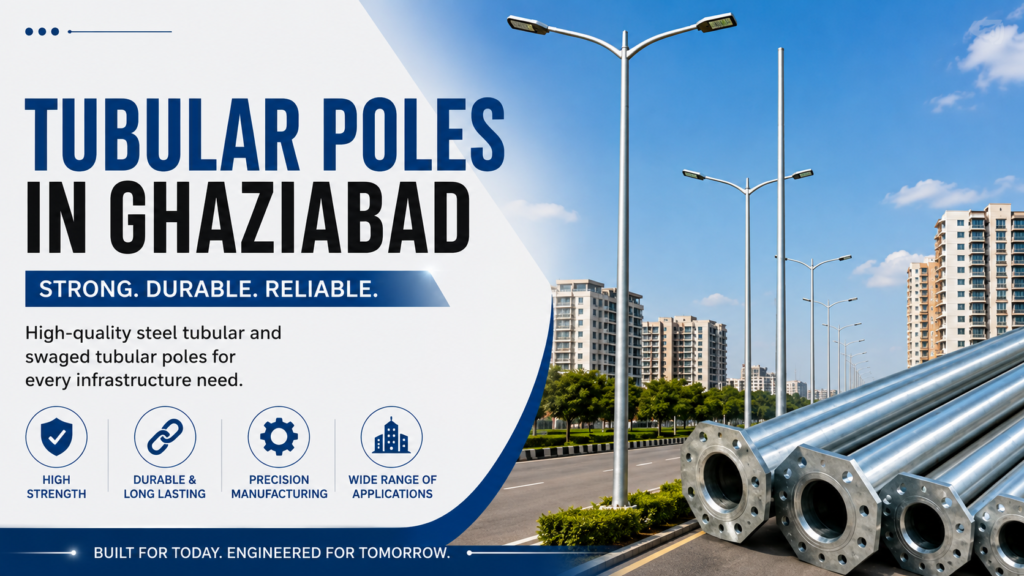
Tubular Poles in Ghaziabad: Complete Guide to Steel and Swaged Tubular Poles

Infrastructure projects require strong, durable, and reliable structural products that can perform consistently in demanding environments. Tubular poles in Ghaziabad are widely used for street lighting, highways, industrial facilities, commercial developments, residential areas, public infrastructure, and other outdoor applications. Ghaziabad is an important industrial hub in Uttar Pradesh, making it a strategic location for sourcing steel poles and fabricated structures. Choosing an experienced manufacturer can help contractors, EPC companies, infrastructure developers, and businesses obtain poles manufactured according to their specific project requirements. What Are Tubular Poles? Tubular poles are hollow steel poles designed to provide structural strength while maintaining a practical and streamlined profile. They can be manufactured in different heights, diameters, thicknesses, and configurations depending on their intended application. One commonly used type is the swaged tubular pole, which consists of multiple steel sections that are progressively reduced and joined to create a tapered structure. Because of their strength, versatility, and adaptability, tubular poles are suitable for a wide range of infrastructure and lighting requirements. Why Choose Tubular Poles in Ghaziabad? When sourcing tubular poles in Ghaziabad, buyers can benefit from working with a manufacturer located within a major industrial region. Local manufacturing can make communication, customization, inspection, transportation, and project coordination more convenient. Before selecting a tubular pole manufacturer, buyers should consider: A properly specified tubular pole can provide reliable performance and help meet the structural requirements of the installation. Swaged Tubular Poles: A Strong and Practical Solution A swaged tubular pole is manufactured using multiple steel sections that are progressively reduced and joined to form a tapered pole. This construction provides an effective balance between strength, weight, and material usage. If you are looking for a swaged tubular pole manufacturer in Ghaziabad, Friends Engineers India provides steel tubular swaged pole solutions for street lighting, industrial projects, urban infrastructure, highways, parks, and other applications. Learn more about the company’s Swaged Tubular Pole Manufacturer in Ghaziabad, Uttar Pradesh. Swaged tubular poles can be manufactured in different configurations according to project requirements, including pole height, section arrangement, mounting requirements, and foundation specifications. Applications of Steel Tubular Swaged Poles A steel tubular swaged pole can be used for various infrastructure and industrial applications. Common applications include: For customers specifically looking for a steel tubular swaged pole in Ghaziabad, the poles can be designed according to the required height, load, mounting configuration, and project specifications. You can also explore Friends Engineers India’s dedicated page for Steel Tubular Swaged Pole in Ghaziabad to learn more about their applications, advantages, pricing factors, and manufacturing approach. How to Choose a Swaged Tubular Pole Manufacturer in Ghaziabad When looking for a swaged tubular pole manufacturer in Ghaziabad, price should not be the only consideration. Product quality, manufacturing expertise, structural specifications, finishing, quality control, customization, and delivery capability are equally important. A reliable manufacturer should understand the technical requirements of the project and manufacture poles according to the specified dimensions and performance requirements. For projects across the state, buyers can also search for a swaged tubular pole manufacturer in Uttar Pradesh capable of supplying products to different cities and infrastructure locations. Friends Engineers India manufactures swaged tubular poles in different sizes and configurations and supplies them across Uttar Pradesh, Delhi NCR, and other parts of India. Steel Tubular Swaged Pole Price in Uttar Pradesh The steel tubular swaged pole price in Uttar Pradesh depends on the specifications and requirements of each project. There is no universal price because poles can differ considerably in size, material thickness, configuration, and finishing. Factors that may influence the steel tubular swaged pole price include: For this reason, customers should provide detailed specifications when requesting a quotation instead of relying solely on a generic market price. Understanding a Steel Tubular Swaged Pole Price List A steel tubular swaged pole price list can help buyers understand pricing across different pole configurations. However, prices should always be compared based on equivalent specifications. For example, two poles may have the same overall height but differ in steel thickness, section dimensions, finishing, or structural design. These differences can significantly affect the final price. Customers looking for a steel tubular swaged pole price list Ghaziabad should also confirm whether the quoted price includes finishing, transportation, taxes, accessories, and other project-related requirements. Friends Engineers India states that pricing depends on factors including pole height, thickness, material grade, galvanization, and project requirements. For the latest pricing, buyers can request a project-specific quotation. Steel Tubular Pole Swaged Manufacturing Process The manufacturing process has a direct impact on the quality, strength, and durability of a tubular pole. A typical steel tubular pole swaged manufacturing process may include: 1. Material Selection Suitable steel is selected according to the required specifications and application. 2. Cutting and Preparation The steel material is cut and prepared according to the required dimensions. 3. Forming and Swaging The sections are formed and progressively reduced to create the required tapered profile. 4. Joining and Welding The sections are assembled and joined securely to create the complete pole structure. 5. Surface Preparation The pole surface is prepared for the required protective treatment or finishing. 6. Quality Inspection Dimensions, joints, fabrication quality, finishing, and other relevant parameters are inspected according to the applicable requirements. 7. Dispatch The completed poles are prepared for safe transportation and delivery to the project location. Friends Engineers India describes its swaged pole fabrication process as including precision cutting, forming, welding, alignment verification, dimensional checks, and surface finishing. Why Is Steel Used for Tubular Poles? Steel is widely used for tubular poles because it provides a combination of structural strength, durability, fabrication flexibility, and adaptability. Steel poles can be manufactured in different shapes, dimensions, and configurations to meet project requirements. With suitable surface protection, they can also be used for long-term outdoor applications. This makes steel tubular poles a practical choice for lighting, industrial, commercial, and infrastructure projects. Tubular Poles for Different Infrastructure Applications Different projects require different types of poles. Depending on the application, customers may also consider octagonal poles, high mast poles, decorative

Octagonal Poles

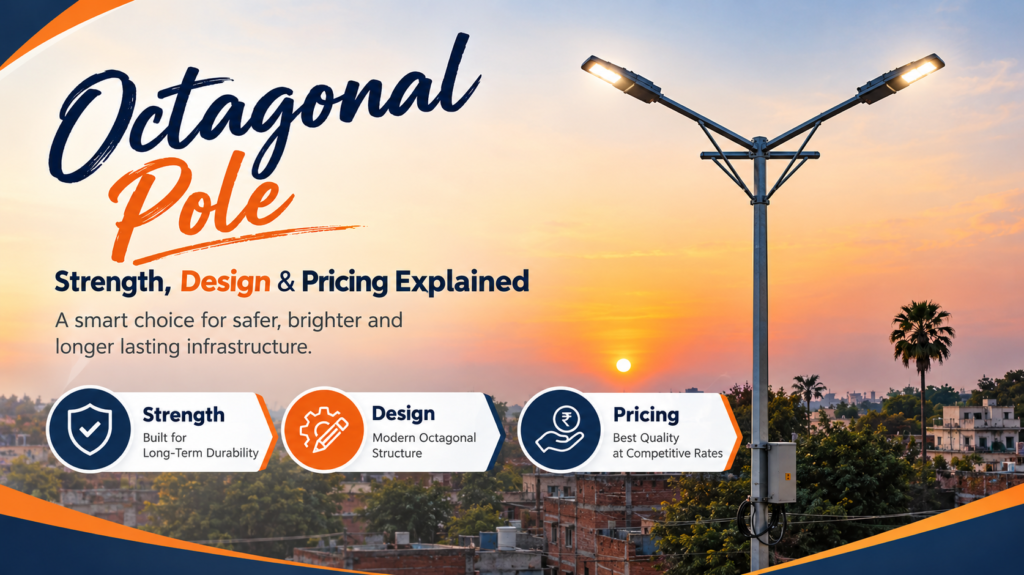
The Complete Guide to Octagonal Poles: Strength, Design & Pricing Explained

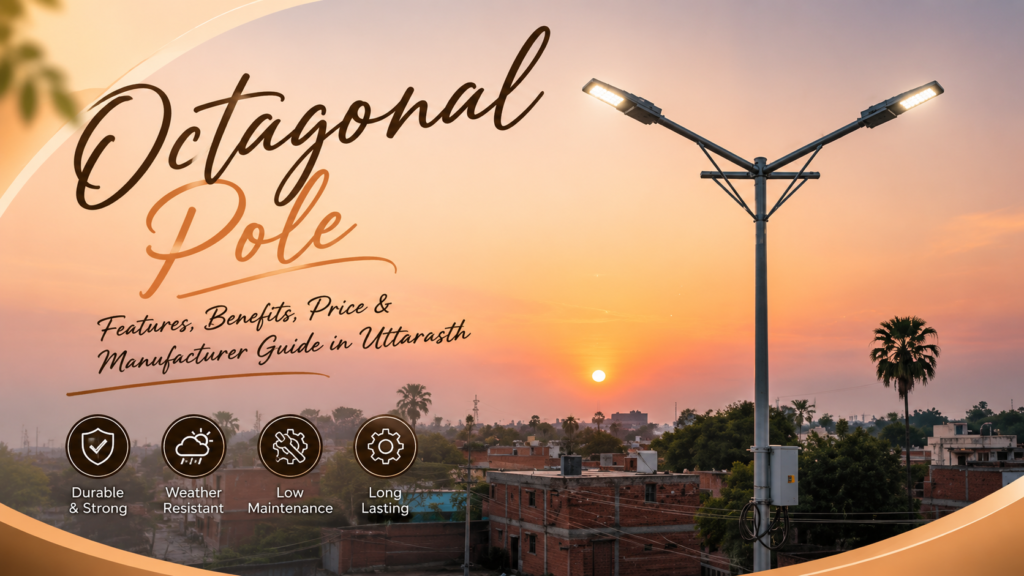
When it comes to modern infrastructure and urban development, choosing the right lighting structure is more important than ever. Whether it’s highways, residential streets, or industrial zones, the demand for durable and aesthetically pleasing lighting solutions has led to the rise of the octagonal pole. In this blog, we’ll explore everything you need to know—from features and benefits to selecting the right octagonal pole manufacturer and understanding the octagonal pole price, including insights on the popular 9 mtr octagonal pole price. What is an Octagonal Pole? An octagonal pole is a steel pole with an eight-sided (octagonal) cross-section, designed for superior strength and durability. These poles are widely used for street lighting, highways, stadiums, and public infrastructure projects. Unlike traditional round poles, octagonal designs provide better load distribution and resistance to wind pressure, making them a preferred choice for engineers and contractors. Why Choose an Octagonal Light Pole? An octagonal light pole offers several advantages that make it stand out: 1. High Strength & Durability Manufactured using high-quality steel, these poles are designed to withstand harsh weather conditions, including heavy winds and rain. 2. Corrosion Resistance Most poles are hot-dip galvanized, ensuring long-term protection against rust and corrosion. 3. Aesthetic Appeal Their sleek and modern design enhances the overall look of urban and commercial spaces. 4. Easy Installation Octagonal poles are engineered for quick and hassle-free installation, reducing labor costs and time. Applications of Octagonal Street Light Poles The octagonal street light pole is widely used across multiple sectors: Their versatility and structural stability make them ideal for both high-mast and standard lighting systems. Choosing the Right Octagonal Pole Manufacturer Selecting a reliable octagonal pole manufacturer is crucial for ensuring quality and performance. Here’s what you should look for: 1. Quality Standards Ensure the manufacturer follows industry standards like IS specifications and uses premium-grade steel. 2. Customization Options A good manufacturer should offer customization in height, thickness, and design. 3. Galvanization Process Hot-dip galvanization is essential for durability—always confirm this feature. 4. Experience & Reputation Choose manufacturers with a proven track record in delivering large-scale projects. Understanding Octagonal Pole Price The octagonal pole price can vary based on several factors: Typically, prices increase with height and structural strength requirements. 9 Mtr Octagonal Pole Price: What to Expect? The 9 mtr octagonal pole price is one of the most searched queries due to its common use in street lighting. Average Price Range: A 9-meter pole is ideal for roads, residential streets, and medium-scale commercial areas, offering a perfect balance between height and cost. Key Factors to Consider Before Buying Before finalizing your purchase, keep these points in mind: Making the right choice ensures long-term performance and cost efficiency. Signage mast poles are used for highway signboards, traffic signage, and advertisement boards. Learn more about signage mast poles and their importance in road safety and infrastructure projects. Final Thoughts The growing demand for smart and sustainable infrastructure has made the octagonal street light pole a top choice in modern construction. Whether you’re planning a government project or a private development, investing in a high-quality octagonal light pole from a trusted octagonal pole manufacturer is essential. Understanding the octagonal pole price, especially the 9 mtr octagonal pole price, will help you make an informed decision while staying within budget. Looking to Buy Octagonal Poles? Always compare multiple manufacturers, check specifications carefully, and prioritize quality over price to ensure long-term value. Octagonal Pole – Frequently Asked Questions 1. What is an octagonal pole used for? Ans. An octagonal pole is mainly used for street lighting, highways, residential areas, and industrial zones due to its high strength, durability, and modern design. 2. Why choose an octagonal light pole over a round pole? Ans. An octagonal light pole offers better load distribution, higher wind resistance, and improved aesthetics compared to traditional round poles. 3. Who is the best octagonal pole manufacturer? Ans. The best octagonal pole manufacturer is one that provides high-quality steel, proper galvanization, customization options, and follows industry standards. 4. What is the average octagonal pole price? Ans. The octagonal pole price depends on height, thickness, and material quality. Prices typically vary based on project requirements and specifications. 5. What is the 9 mtr octagonal pole price in India? Ans. The 9 mtr octagonal pole price generally ranges from ₹9,000 to ₹20,000 depending on quality, coating, and manufacturer. 6. What material is used in octagonal street light poles? Ans. An octagonal street light pole is usually made from high-grade steel and finished with hot-dip galvanization for corrosion resistance. 7. How long does an octagonal pole last? Ans. A well-manufactured octagonal pole can last 20–30 years or more with proper galvanization and maintenance. 8. Can octagonal poles be customized? Ans. Yes, a professional octagonal pole manufacturer offers customization in height, thickness, base plate size, and design as per project needs. 9. Are octagonal street light poles suitable for highways? Ans. Yes, octagonal street light poles are ideal for highways due to their strength, stability, and ability to withstand high wind loads. 10. How to choose the right octagonal pole? Ans. Consider height, load capacity, wind resistance, and budget. Comparing octagonal pole price and manufacturer quality is also important.

Octagonal Poles

Octagonal Pole Manufacturer in Ghaziabad – Complete Guide to Octagonal Street Light Poles and 9 Mtr Octagonal Pole Price in Uttar Pradesh

With the rapid development of urban infrastructure, highways, smart city projects, and industrial areas, the demand for strong and durable street lighting solutions has increased significantly. Among the most preferred lighting structures used across India today are octagonal poles. These poles are widely installed for road lighting, highway lighting, residential societies, parking areas, and industrial zones. If you are searching for a reliable octagonal pole manufacturer in Ghaziabad or want to know about the 9 mtr octagonal pole price and the octagonal pole price in Uttar Pradesh, this detailed guide will help you understand everything about octagonal street light poles, their features, benefits, pricing factors, and applications. What is an Octagonal Pole? An octagonal pole is a high-strength steel lighting pole designed with eight sides (octagonal shape). This design gives the pole better structural strength, stability, and wind resistance compared to traditional round or tubular poles. An octagonal light pole is manufactured using high-quality steel sheets that are cut, folded, and welded into an octagonal structure. These poles are generally hot dip galvanized to protect them from corrosion and harsh environmental conditions. Because of their strength and durability, octagonal street light poles are widely used in: Their modern design and long service life make them one of the most reliable solutions for outdoor lighting infrastructure. Why Octagonal Street Light Poles Are Popular Today, most infrastructure projects prefer octagonal street light poles because they offer better performance, durability, and aesthetics compared to conventional poles. 1. High Structural Strength The unique eight-sided design of an octagonal pole provides excellent load distribution and strength. This structure allows the pole to withstand strong wind pressure and heavy lighting fixtures. 2. Corrosion Resistance Most octagonal light poles are hot dip galvanized, which protects the steel from rust and corrosion. This coating ensures the pole can withstand extreme weather conditions such as rain, humidity, and heat. 3. Long Service Life A well-manufactured octagonal pole can last for several decades with minimal maintenance. This makes it a cost-effective solution for municipalities and infrastructure developers. 4. Elegant and Modern Design The sleek design of octagonal street light poles enhances the visual appeal of streets, highways, commercial complexes, and public spaces. 5. Suitable for Multiple Lighting Applications An octagonal light pole can support various types of lighting fixtures, including LED street lights, floodlights, and decorative lighting systems. Swaged tubular poles are another popular lighting pole option used for street lighting and industrial areas. Read our blog on swaged tubular poles to understand their manufacturing process, benefits, and applications. Octagonal Pole Manufacturer in Ghaziabad Ghaziabad has become one of the major industrial hubs for manufacturing lighting poles and infrastructure equipment. Many reputed companies operate as octagonal pole manufacturers in Ghaziabad, supplying poles across India for government projects, highways, and private developments. A professional octagonal pole manufacturer in Uttar Pradesh typically uses advanced manufacturing technology and high-quality raw materials to produce durable poles. Manufacturing processes usually include: A trusted octagonal pole manufacturer also offers customized solutions based on project requirements such as different heights, thickness levels, and bracket designs. 9 Mtr Octagonal Pole Price in Uttar Pradesh The 9 mtr octagonal pole price is one of the most commonly searched queries by contractors, government departments, and infrastructure developers. A 9-meter pole is commonly used for street lighting in highways, residential areas, and industrial zones. However, the octagonal pole price in Uttar Pradesh can vary depending on several technical factors. Factors Affecting 9 Mtr Octagonal Pole Price The price of a 9 mtr octagonal pole usually depends on: 1. Steel ThicknessThe thickness of the steel sheet used in the pole directly affects its strength and price. 2. Base Plate SizeA larger base plate provides better support but also increases the cost. 3. Galvanization QualityHigh-quality hot dip galvanization increases durability and slightly raises the price. 4. Pole Height and DesignDifferent heights and designs can affect manufacturing complexity. 5. Quantity OrderedBulk orders from an octagonal pole manufacturer in Ghaziabad often receive discounted rates. Because of these variables, the 9 mtr octagonal pole price in Uttar Pradesh can differ from one manufacturer to another. For the most accurate pricing, it is best to request a quote from a reliable octagonal pole manufacturer. Types of Octagonal Light Poles Different types of octagonal light poles are available based on their application and design. 1. Street Light Octagonal Poles These are commonly used in urban streets and residential areas for LED street lighting. 2. Highway Lighting Poles These poles are designed to support high-power lighting systems for highways and expressways. 3. Decorative Octagonal Poles These poles are used in parks, commercial complexes, and premium residential areas where appearance is important. 4. High Mast Octagonal Poles High mast poles are used in large open areas such as stadiums, airports, and large parking spaces. Applications of Octagonal Street Light Poles The demand for octagonal street light poles in Ghaziabad and Uttar Pradesh is increasing due to growing infrastructure development. These poles are widely used in various projects. 1. Urban Street Lighting Cities and municipalities install octagonal poles for reliable and efficient street lighting. 2. Highways and Expressways Highways require strong and durable poles that can withstand heavy wind pressure. Octagonal light poles are ideal for these environments. 3. Industrial Areas Factories and industrial zones use octagonal street light poles to provide proper lighting for safety and operations. 4. Residential Townships Modern residential projects prefer octagonal poles because of their sleek design and long life. 5. Commercial Complexes Shopping malls, parking areas, and commercial buildings often install decorative octagonal light poles. Advantages of Buying from a Trusted Octagonal Pole Manufacturer Choosing a reliable octagonal pole manufacturer in Ghaziabad offers several benefits for contractors and project developers. 1. Quality Assurance Professional manufacturers follow strict quality control processes to ensure durability and strength. 2. Customization Options Manufacturers can customize pole height, thickness, bracket design, and finish based on project requirements. 3. Competitive Pricing An experienced octagonal pole manufacturer in Uttar Pradesh can offer competitive octagonal pole price without compromising on quality. 4.

Engineering Strength. Built to Last.

Established in 1998, Friends Engineers (India) is a trusted manufacturer and supplier of industrial products, including MS steel tubular poles, GI poles and bends, steel structures, pole brackets, and trusses.

+91-9810930406, 9810298278, 9910502345

© 2026 All Right Reserved Friends Engineers (India)
Design By www.cypwebtech.com

Support

Engineering Strength. Built to Last.

Established in 1998, Friends Engineers India is a trusted manufacturer and supplier of industrial products, including MS steel tubular poles, GI poles and bends, steel structures, pole brackets, and trusses.

Support

+91-9810930406, 9810298278, 9910502345

© 2026 All Right Reserved Friends Engineers India Design By www.cypwebtech.com